A Small Patio That Feels Like a Garden Room
Three moves — ground cover, a seat that faces something green, and a few big pots — turn a bare patio into a room you'll actually use.
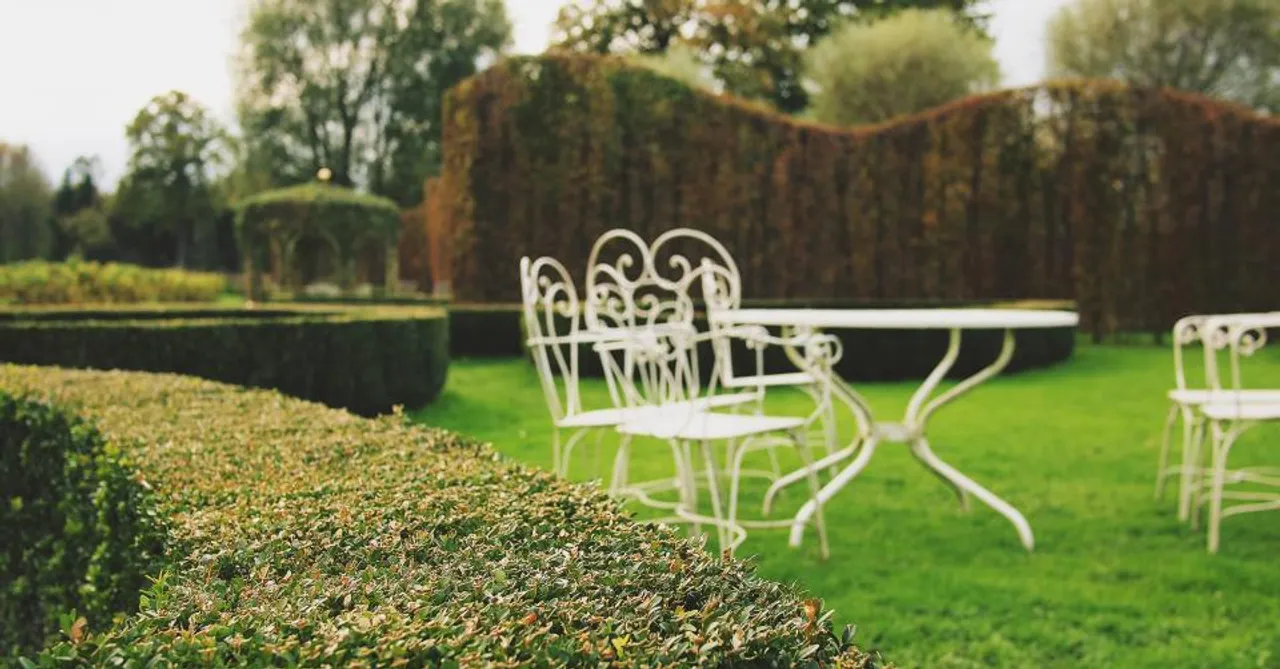
A patio fails when it is nothing but paving. You pave a square of yard, set a table on it, and wonder why nobody sits out there. The reason is usually simple: the space has no edges and nothing to look at. A room indoors works because walls and furniture tell you where it begins and ends, and where to face. A patio needs the same cues, made of plants instead of drywall. You do not need a big budget or a landscape designer. Three moves turn a bare paved corner into a room you will actually want to sit in.
Start with the ground
Bare concrete or pavers read as a parking spot, not a destination. The cheapest fix is to soften the floor. An outdoor rug — flat-weave, meant to get wet — instantly marks the seating area and adds the first layer of comfort. If you want something permanent, lay a few large stepping stones in a patch of gravel or bark between the house and the seating, so the eye travels over texture instead of a blank slab.
Underfoot texture also changes how a space feels at the end of the day. A rug you can hose off, or gravel that crunches underfoot, makes the patio feel considered rather than leftover. This is the step people skip because it does not photograph like a statement piece, but it is the one that makes the space feel finished.
Give every seat something to face
The single most useful rule for a small patio: never put a chair with its back to the garden. People sit where they can look at something green. Arrange your seating so the view is a hedge, a bed of flowers, a potted tree — anything living — rather than the house wall or the neighbors’ fence.
If the view is the problem, make one. A row of three or four large containers along the far edge, planted with something tall like ornamental grass or a small tree, gives the eye a green horizon to rest on. You are not hiding the fence so much as giving the space a back wall. And a back wall is what makes it a room.
Choose a few big pots over many small ones
Small pots read as clutter, and they dry out fast. A small patio looks bigger with fewer, larger containers. Two or three generous pots — eighteen inches across or more — hold more soil, need watering less often, and give plants room to grow into a real presence. Group them in odd numbers and vary the heights: one tall plant, one trailing, one round and low.
Big pots also anchor the corners of the space. Put one where the seating area meets the house, one at the far edge of the view, and the space starts to describe its own shape. You will feel it the first time you walk out and the patio no longer looks like leftover yard.
Add light so the room works after dark
The fastest way to abandon a patio is to have nowhere pleasant to sit once the sun drops. A string of warm, weatherproof lights strung overhead does more for the space than any furniture upgrade, because it draws the ceiling line and makes the room feel enclosed. A small lantern or a candle on the table is enough for the rest. Keep light warm and low — you are making an evening room, not lighting a parking lot.
Size the furniture to the space
A small patio dies from furniture that is too big for it. A dining set for eight on a ten-foot-square slab leaves no room to walk, and the space feels cramped before anyone sits down. Choose a bistro set or a pair of chairs with a small side table, and leave open floor around them. The open floor is part of the design — it is what lets the eye move and the space breathe.
The same rule works in the other direction: one generous statement piece reads as intentional where a jumble of small items reads as clutter. A single comfortable chair with a good cushion beats three folding chairs nobody wants to sit in. Buy less, buy better, and let the plants do the decorating.
A patio is a habit, not a project
None of these moves is complicated on its own: a rug, a seat facing green, three big pots, a string of lights. Put them together and the patio stops being a slab you own and becomes a room you use. The test is simple. If you find yourself carrying a cup of coffee out there in the morning without thinking about it, the room is working.
 Plants & Care
How to Water Houseplants Without the Guesswork
Stop watering on a schedule and learn the two signals every houseplant gives you, so you water when the plant needs it — not when the calendar says so. Soil & Compost
Start Composting With a Bin You Can Manage
Composting doesn't need to be a science project. A simple two-ingredient bin and one weekly habit turn kitchen scraps into soil. Seasonal Guides